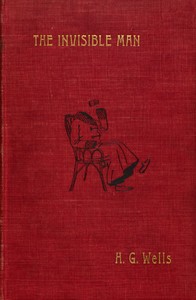
The Invisible Man
A practical guide—then open the legal full text when you're ready.
Reading guide
Who it’s for, why read, how to read, what you’ll gain—skim before you commit hours to the text.
AI-assisted draft, checked before publish. Use it to decide and start—not as a substitute for the book or scholarly citation.
Who it's for
Readers who enjoy classic science fiction with a moral edge. This short novel (about 150 pages) moves fast and suits anyone curious about the "invisible man" idea beyond special effects. No prior Wells is needed.
Why read it
H. G. Wells takes a simple sci-fi premise—a scientist who makes himself invisible—and pushes it to a dark conclusion. The story begins as a mystery in an English village and becomes a study of power without accountability. Griffin, the invisible man, is not a hero; he is a warning. Written in 1897, the novel still asks urgent questions about technology, isolation, and the choices we make when no one can see us.
How to read
- Read the main text first for suspense and action; save annotations for a second pass.
- Track the moments when Griffin shifts from victim to aggressor, and ask what drives each turn.
- Notice how the villagers react to a stranger—it is a small model of how societies treat outsiders.
- If you have seen a film adaptation, compare it: films often emphasize spectacle, while the novel stays close to psychology and ethics.
What you'll gain
- A clear sense of invisibility as a metaphor for social erasure, not just a scientific trick.
- Insight into how brilliance without empathy can lead to self-destruction.
- An appreciation of Wells's lean, propulsive storytelling and how sci-fi can carry serious human questions.
Pause & think
If you could become invisible, what would you do first? How much of Griffin's tragedy comes from society's rejection, and how much from his own choices?
Next step: open the real book
This page is the guide; Project Gutenberg holds the legal text.
We do not host unauthorized commercial ebook files. Prefer official public-domain sources. Legal reading guide.