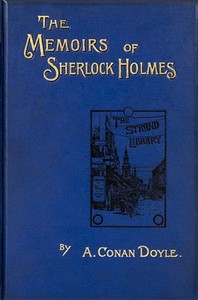
The Memoirs of Sherlock Holmes
A practical guide—then open the legal full text when you're ready.
Reading guide
Who it’s for, why read, how to read, what you’ll gain—skim before you commit hours to the text.
AI-assisted draft, checked before publish. Use it to decide and start—not as a substitute for the book or scholarly citation.
Who it's for
This collection suits readers who already know Sherlock Holmes from the earlier stories and want more short cases. It is also good for busy readers who like complete mysteries in one sitting. The language is accessible for intermediate English learners, and each story stands alone.
Why read it
*The Memoirs of Sherlock Holmes* is a turning point in the series. The stories still follow the familiar pattern of a strange problem, a careful investigation, and a clever explanation. But several cases, such as "The Yellow Face" and "The Resident Patient," show Holmes making mistakes or facing moral limits. The final story, "The Final Problem," changes the series in a way that mattered greatly to early readers. Reading this collection shows how Doyle kept a short-story formula fresh by varying tone, narrator, and outcome.
How to read
- Start with "The Final Problem" or "The Greek Interpreter" if you want the most famous cases first, then go back to the others.
- Read one story per sitting. Each is built like a small puzzle, and stopping halfway can weaken the effect.
- Watch Watson's narration. He often knows as little as the reader, and that is how Doyle builds suspense.
- In the original English, do not stop for every Victorian word. Finish the story, then look up what you need.
- After "The Final Problem," pause before moving to later collections. Ask what this ending meant for readers who thought Holmes was gone for good.
What you'll gain
- A clear sense of the classic short detective story: odd detail, false assumption, key evidence, and explanation.
- A more human Holmes, whose judgment can be shaped by bias or feeling.
- Practice in reading an unreliable narrator who hides information without lying.
- A vivid picture of late Victorian England, with its family secrets and class tensions.
Pause & think
In "The Yellow Face," what does Holmes get wrong, and why does that matter for the story's meaning? In "The Final Problem," is Moriarty a fully drawn character or mostly a force of nature?
A passage to notice
Holmes often explains that one must reason backward from effects to causes. Notice how often his first theory is wrong, and how he adjusts. That habit of revision is as important as his famous deductions.
Next step: open the real book
This page is the guide; Project Gutenberg holds the legal text.
We do not host unauthorized commercial ebook files. Prefer official public-domain sources. Legal reading guide.