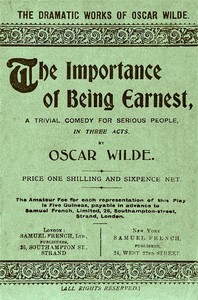
The Importance of Being Earnest
A practical guide—then open the legal full text when you're ready.
Reading guide
Who it’s for, why read, how to read, what you’ll gain—skim before you commit hours to the text.
AI-assisted draft, checked before publish. Use it to decide and start—not as a substitute for the book or scholarly citation.
Who it's for
This guide is for readers who enjoy witty dialogue, satire, and short classic plays. It suits beginners to Wilde or to drama in general. The play is brief (three acts) and fast-paced, but the humor relies on wordplay and social context, so a little patience with irony helps.
Why read it
*The Importance of Being Earnest* is Oscar Wilde's most celebrated comedy. It turns on a pun between the name Ernest and the word earnest, mocking Victorian sincerity and social masks. The plot is absurd but tightly built, and the dialogue sparkles with epigrams that are still quoted today. Reading it now offers both laughter and a sharp lens on how societies perform virtue.
How to read
- Read the play straight through first, following the banter without stopping for every allusion.
- Notice the recurring pun on Ernest/Earnest and the prop of the handbag; they set up key jokes.
- If you use an annotated edition, save the notes for after the second act so the comic timing stays intact.
- After finishing, watch a stage or film version to hear how the lines land in performance.
What you'll gain
- A clear sense of how Wilde builds paradoxes and epigrams.
- Insight into Victorian attitudes toward marriage, class, and identity.
- A model for using humor to question serious social norms.
A passage to notice
"The truth is rarely pure and never simple."
Next step: open the real book
This page is the guide; Project Gutenberg holds the legal text.
We do not host unauthorized commercial ebook files. Prefer official public-domain sources. Legal reading guide.